Get an email when a new post is published. Confirm your email to start.
Unsubscribe anytime.
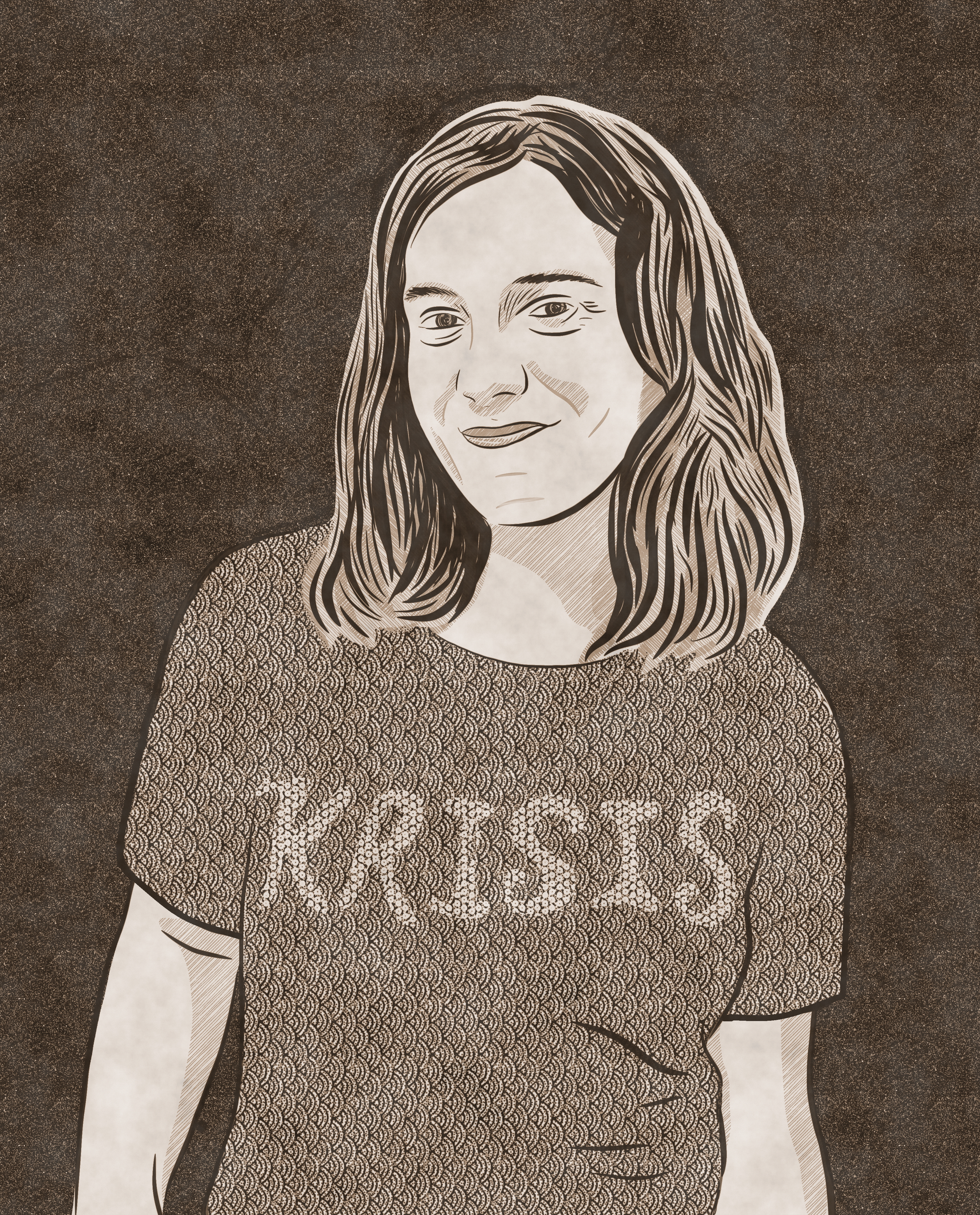
My name is Krisi…
…and I’m often in crisis (existential, interpersonal, illusory—you name it.)
Here is where I share my readings that get me through the turbulent, calm, wonderful, silly, and often comicotragic days. And you know what? I thought it would be nice to share the interesting stuff I read and my (maybe?) interesting thoughts.
You cannot overestimate the unimportance of practically everything writes Greg McKeown in Essentialism: The Disciplined Pursuit of Less.
Sure, practically everything is unimportant, yet virtually most things have a formidable way of overwhelming me and convincing me of their Targaryenesque birthright to be on top of my to-do list.
Just a few days ago I was cooking at home and almost without noticing, I was mentally going through all of the projects I had to focus on in the coming months. My anxiety was growing as my thoughts were physically bouncing on and off emails I had to write, books I wanted to read, and even bigger musings such as who I wanted to become. Did I want to be a teacher, or work in tech, or organize kids summer camps in Bulgaria? Then, let’s throw in the mix the 23 podcast episodes I have saved to listen to, blog article ideas, wanting to adopt a dog, get into woodwork, move apartments, and let us not forget my addiction to mindlessly scrolling on dating apps or refreshing WhatsApp!
Philosophical Breakthroughs Come to the Vacationeers#
My conclusion to what felt like a quiet storm progressing into a headache was: I need vacation. I need an escape. Give me a month outside of society to catch up on life and then I can live life.
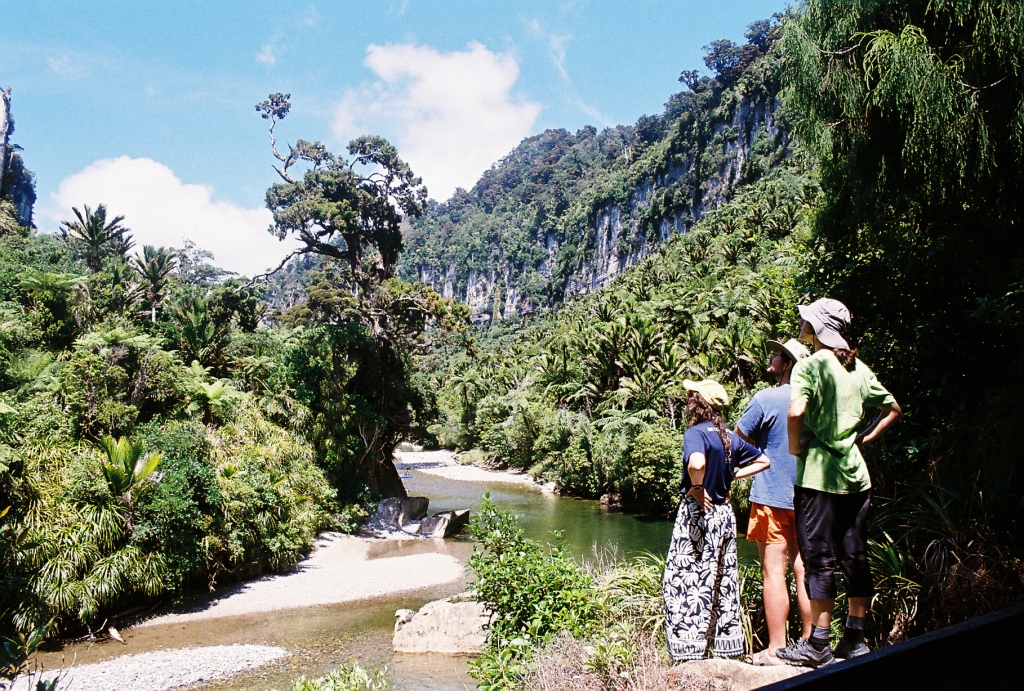
The only problem with this logic? I literally just had a one month vacation about a month ago! I was hiking in New Zealand national parks, I disconnected and had no mobile data for the most part, read six books, and had many meaningful conversations with amazing people. In short, I believe if there were to be a magical reboot program to make you reflect on what you want of your life, I likely did it. Riding on the beautiful new year inspiration wave, I went to the end of the world and had a wonderful once-in-a-lifetime vacation free of the noise and distractions. I thought I had it all figured out – what my ideal routine would look like once I’m back, how many books I would read each month, where my focus and energy would be going (only cool places, of course, like climbing, philosophy, volunteering and leftist podcasts).
However, to paraphrase one uplifting trekker I met in New Zealand:
Every time you embark on a big journey and take a step back from your daily life you think you have solved all of the world’s problems and it is all true until… you come back from vacation!
How could it be that in the rare occasions in which we do get the space to breathe, we reach the apex of mindfulness and inspiration, but then struggle to bring whatever brilliant and true-to-oneself revelations we had back to the practicalities of “real life”?
Tell me, what is it you plan to do
with your one wild and precious life?
– Mary Oliver
Since universal basic income sadly doesn’t seem to be knocking on our door anytime soon, I am getting really anxious about what to do with this non-vacation life – with my one wild and precious life as a part of the productive workforce (before I retire at age 90 judging from where global politics are heading).
And after having been back home in Grenoble for a few weeks, it is precisely in this état d’esprit of a Krisis, that I started operating, promptly getting further away from my vacation clarity. So I resorted to something I rarely do.
I started reading a self-help book .
I discovered Essentialism: The Disciplined Pursuit of Less by Greg McKeown through my go-to Youtuber for anything health, sport and wellness related – Keltie O’Conner. I often enjoy Keltie’s content because she is honest in portraying her struggles and will try anything before judging. Just like me, she sometimes feels overwhelmed by the myriad of projects or life improvements she sets herself on vanquishing.
And to our rescue comes the practice of essentialism, which, in McKeown’s usage of the word, preaches living one’s life with a strong and disciplined focus on only what is most essential and thus accepting we’ll do less things but we’ll do them better – not to be confused with gender essentialism (the belief that gender is intrinsically and definitively locked in biology), nor with Aristotelian essentialism (the belief that each entity has a fundamental essence)!
In the self-help version of this notion, the author’s ideas vary from obvious elementary wisdom to some rather illuminating insights and beliefs. When I first told my roommate what I was reading, he had a mocking reaction of “It’s sort of obvious that if you do less things you will do them better, no?”
While I don’t disagree here – the basic premise is nothing new or revolutionary, it is an important reminder for anxiety-prone people who often stretch thin on a multitude of priorities. In summary, McKeown tells us:
We should choose to do only what is essential instead of half-assing the myriad of not-so-important things.
We should be ready to slow down and dedicate time and space for reflection to find what is essential.
We should accept that we can’t have it all – we will have to give up opportunities that are really good but just not essential.
But are these principles really applicable? I admit, I find some aspects compelling while others very frustrating.
Through the first key message, for instance, we are told that most things we worry about we simply shouldn’t do. Just Don’t Do It, an alternative Nike motto could sound like!
It is unlikely you will wake up one day and say, ‘I wish I had been less true to myself and had done all the non-essential things others expected of me!’
I kept this quote as I believe it serves as a reminder that looking back through the lens of time, we often have a clearer outlook on what was truly important. Yet, even without being on my deathbed, I can certainly say that it is unlikely I will regret going to the hospital with a friend; however, I might slightly regret the accumulated time spent on boring Hinge dates. To a similar logic, I have a friend who worked for 10 years as a physiotherapist – a stable career path pushed by her parents, but then she decided to start over with a philosophy degree, which was always her authentic want. I am not saying people have to regret following their passion later than when they are 18 years old, but understandably, she does feel like she could have spent more time being true to herself.
So in that way, the first principle can be seen as an empowering push to detach ourselves from paths, activities, even people who don’t align with what we want.
However, what I find problematic is this seemingly obvious distinction between:
essential = true to oneself, authenticnon-essential = useless, forced upon from society, inauthentic
Whereas sometimes, being true to yourself and pleasing society overlap! Or other times, we want to want things because it is expected of us or because it is well sold and aestheticized, and then it becomes hard to tell if you truly, deeply, authentically, from the bottom of your heart want to go to the climbing gym or watch the Bachelor? In my case, oftentimes authentic desire ends up being an indistinguishable mish-mash even for what are supposed to be easy choices such as activities I love.
For example, I love reading. And I believe reading comes most naturally when we allow ourselves to just read what we actually want to and let go of what is expected of us to read. McKeown would tell us to read only what is essential to us instead of buying books that sound smart, that fit into a particular perception of ourselves, or that your crush reads. That is one of the messages one can take away from Essentialism: The Disciplined Pursuit of Less. When considering my next books maybe I ask myself “Do I feel deeply inspired to read this? Or do I just want to project myself as the cool girl who reads niche political science theory with her espresso?”
However, I do also find applying this logic all the time somewhat problematic. Partly thanks to the infinity of content accessible 24/7 online and the illusion of capitalist opportunities, we have developed a sense of high opportunity cost for our time. We know we could theoretically be choosing a myriad of other options at all times.
There will always be something online more informative, surprising, funny, diverting, impressive than anything in one’s immediate actual circumstances.
– Jonathan Crary
In this merciless battle for our attention books are already fighting with archers on horseback while the Internet wields missiles, commands drones and algorithms. So, if we always follow our gut of what we feel 100% inspired to read, don’t we risk only reading the books which get closest to the fast-paced dynamic of reels? The practice of reading can oftentimes be engrossing and make time fly seamlessly, but most times getting to that stage requires discipline and habit, the art of slowing down and fully focusing.
Still, in this particular example I believe the practice of essentialism mostly works (considering this small caveat). And as I am writing, I am getting more and more motivated to do some Marie Kondō-ing of my personal library, or at least of my future books, the way minimalists do for their wardrobe – asking myself: Would I truly love reading this? Would it be essential to my research interest? Does it align with my values?
While it can be challenging to have a balanced approach to life, I’d say the main moral I will take away from Essentialism is that it is ultimately important to figure out what is crucial to you and focus your wild & precious time alive mostly doing that. HOWEVER, this moral being taken with a huge grain of salt, we should apply that in tune with both our personal and global circumstances. The book made it sound too easy. Almost as if, if you’re not courageously doing only what most deeply matters to you, that sounds like a you problem! _ _ So, is it technicallyessential in the grand scheme of my life to look at this reel? Of course not, but I am still subject to the numerous power structures that make it extremely difficult to never watch reels. Is it essential that I spend time with my loved ones or that I write emails? Surely the answer is loved ones, but that doesn’t mean I can just leave society and never open a laptop ever again. I believe essentialism, despite the big claims for a life-changing overall worldview, actually works best on a micro level and should be applied maybe 80% of the time for small choices and 20% for big things. The bigger chunk of its value is that it is helpful in guiding us which book to choose, which work task is most important, or answer the question “Is it essential for me to buy this sports bra, almost identical to the one I already own?” And the smaller chunk – yes, we could and absolutely should also reflect on what is essential in the grand scheme of things, but very, very often the essential is out of our immediate control. Let us not beat ourselves up for it.